

PNOĒ (Cardio-Metabolic Breath Testing) in Albuquerque, NM
A Breath Test That Reveals Your Metabolism and True Fitness
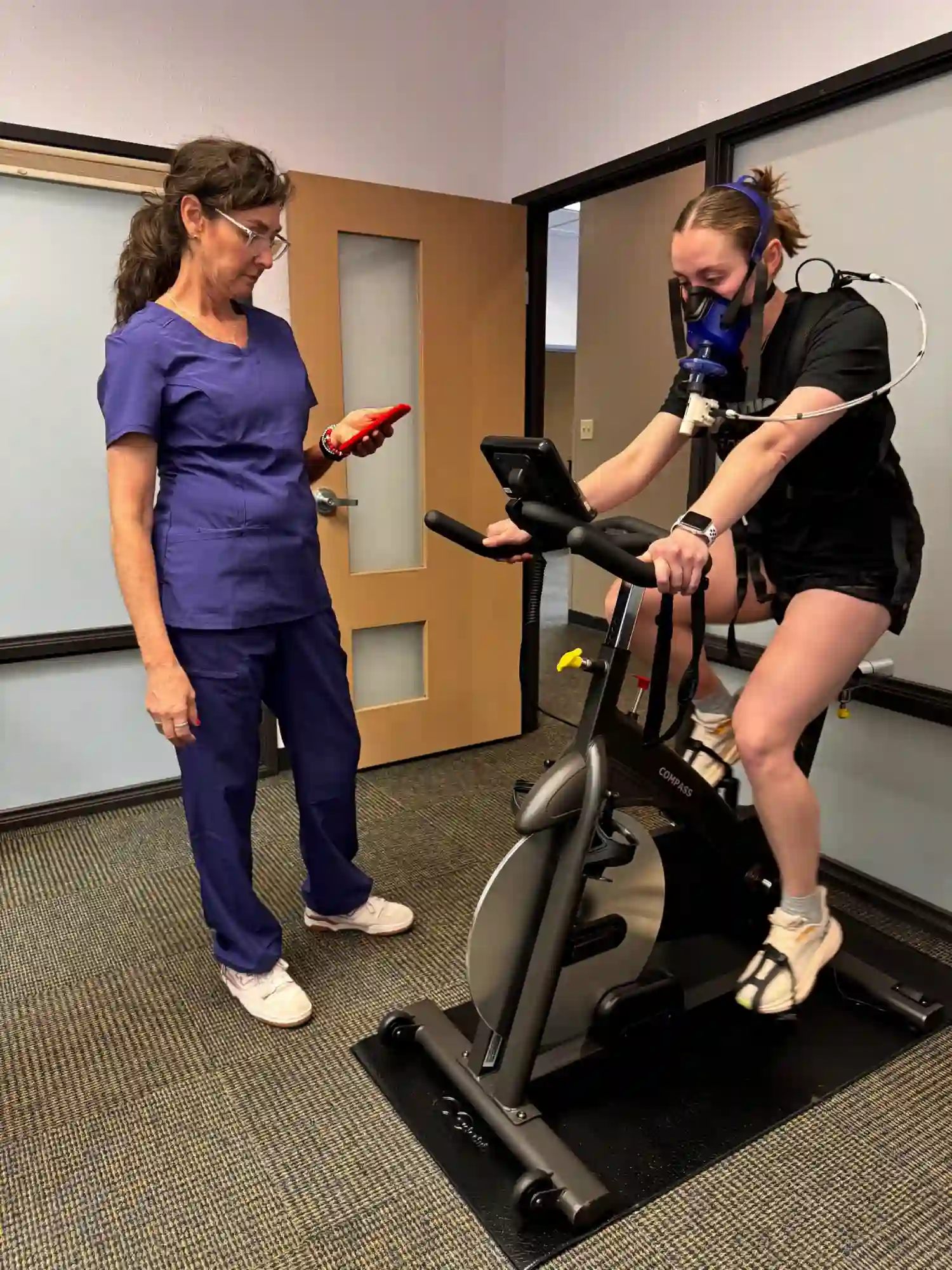
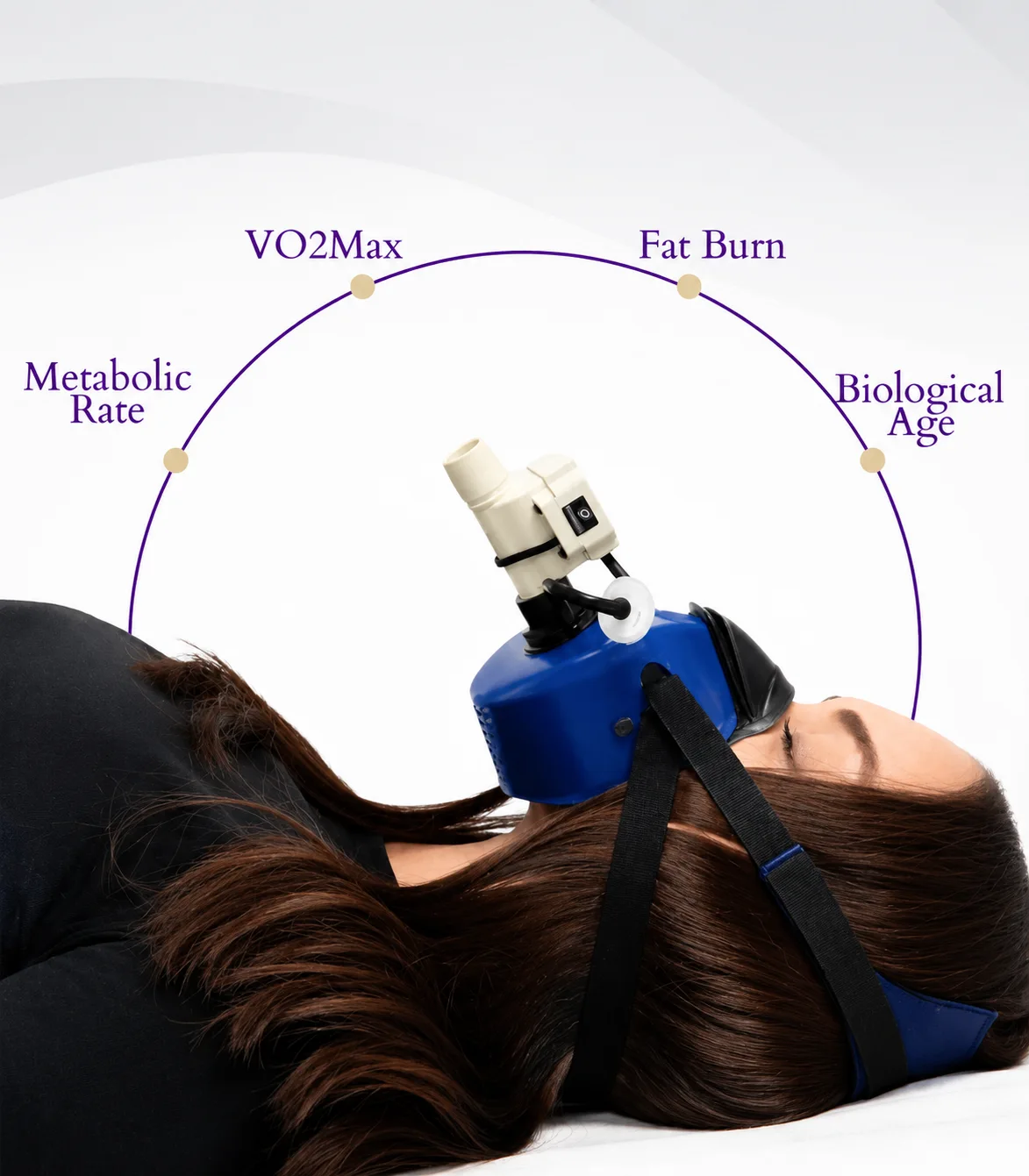
PNOĒ is a clinical-grade breath analyzer that delivers metabolic testing through a short guided protocol, measuring the gases you exhale at rest and during exercise to map exactly how your body burns fuel and uses oxygen. The device produces a resting metabolic rate test result, a VO2 max test result, and a real-time picture of whether you burn fat or carbohydrate at each effort level. For the competitive cyclists who train on the NM-536 or Sandia Crest Byway, the masters runners building a base for the Albuquerque Half Marathon, and the professionals who want a number rather than a guess, this is the starting point for any serious nutrition or training plan.
Enhanced Wellness NM provides PNOĒ cardio-metabolic breath testing in Albuquerque, NM, and pairs every result with a clear action plan. Hence, the data translates directly into smarter training, accurate nutrition targets, and better recovery.
What Does This Testing Reveal?
Resting metabolism
Your cardiometabolic testing result at rest shows how many calories your body burns at rest and which fuel it prefers.
Aerobic fitness and oxygen ceiling
VO2 max testing measures the highest rate at which your body can consume oxygen during hard effort. It is one of the most reliable markers of cardiovascular fitness and long-term endurance potential.
Fat versus carbohydrate burn zones
The breath data show the crossover point at which your body shifts from primarily burning fat to primarily burning carbohydrates. Knowing this lets you train and eat for your actual physiology rather than generic zone charts.
Performance benchmarks
Used for performance testing, the assessment sets precise heart-rate and effort zones from your own data, replacing estimates based on age that can be off by 15 to 20 beats per minute.
Metabolic efficiency
A metabolic assessment also reveals how efficiently you breathe and convert oxygen into usable energy, flagging inefficiencies that cap performance, even in well-trained athletes.
Baseline for a fitness plan
Used as a fitness assessment, the protocol establishes a true starting point for patients entering a weight-loss, performance, or longevity program, so progress is measured against real numbers rather than assumptions.
Who Is A Good Candidate?
This testing may be a good fit if you:
Want nutrition targets based on your actual metabolic rate, not a population estimate.
Are training for endurance and want real zones from your own oxygen data.
Have plateaued in weight or fitness, and need data to identify where the plan broke down.
Are starting a new training or weight-loss program and want a verified baseline.
Want to understand whether fatigue comes from nutrition, training load, or fitness capacity.
It may not be the right fit if you:
Have unstable heart disease or a recent cardiac event that makes graded exercise unsafe.
Have significant lung disease that prevents completing the breathing protocol.
Are acutely ill on the day of the test.
Are not an appropriate candidate based on your health history and provider review.
What Happens During the Test?
Health screen and goal review
Your provider reviews your history, confirms the protocol is safe, and asks which decisions you want the data to inform.
Resting measurement
You breathe normally through the PNOĒ mask for a few minutes while the device measures your resting oxygen use and fuel burn.
Graded exercise
For VO2 and training-zone data, you complete a progressive effort on a treadmill or bike while the mask captures each breath.
Results review
Your numbers are explained clearly: metabolic rate, fat-burning zone, VO2 ceiling, and training thresholds.
Action plan
The results convert into specific calorie targets, macronutrient ratios, and heart-rate zones matched to your goals.
Before and After Your Appointment
Before Your Appointment
- Avoid food, caffeine, and strenuous exercise for at least 3 hours before the test.
- Sleep normally the night before so your resting readings reflect your true baseline.
- Wear exercise clothing and shoes you can move in during the graded effort.
- Bring a summary of your current training load and nutrition approach.
- Tell your provider about any heart, lung, or metabolic conditions before beginning.
After Your Appointment
- Review each number with your provider and ask what it means for your specific goal.
- Apply your new training zones in your next several sessions to calibrate the feel.
- Adjust daily calorie and macro targets to your measured metabolic rate rather than an estimate.
- Retest after a focused training or nutrition block to track how your numbers change.
- Keep a record of your results so you can measure progress against your own data over time.
Why Choose Enhanced Wellness NM for
Metabolic Testing?
Data that drives decisions
Your results come with a clear plan, not a printout left to interpret on your own.
Integrated context
Metabolic findings can connect to functional medicine, hormone evaluation, and nutrition support when the data points in that direction.
Clinical oversight
A provider reviews your history and screens for the cardiac and respiratory conditions that make maximal testing inappropriate.
Useful across goals
Competitive athletes, weight-loss patients, and executives optimizing longevity all use the same test, and each gets a plan specific to their goal.
frequently asked questions
What exactly does PNOĒ measure?
It analyzes the oxygen and carbon dioxide in your breath to calculate your resting metabolic rate, VO2 max, fat-to-carbohydrate burn ratio, and precise training zones. Every number comes from your own biology rather than a formula built on population averages.
Do I have to exercise?
For resting metabolism only, no. For VO2 and training-zone data, yes, you complete a graded effort on a treadmill or stationary bike while wearing the mask.
How accurate is it compared to online calculators?
Meaningfully more accurate. Standard formulas can underestimate or overestimate resting metabolic rate by hundreds of calories per day. The breath test measures your actual oxygen consumption rather than predicting it.
How long does it take?
The full protocol runs about fifteen to twenty minutes of testing, plus the intake conversation and results review.
How often should I retest?
Most people retest every 3 to 6 months, or after a significant training block or a change in body composition. The value is in tracking how your metabolism shifts over time.
Start With A Consultation
Nutrition plans built on guessed calorie numbers and generic zones leave results on the table. Schedule your consultation at Enhanced Wellness NM to find out what your metabolism is actually doing.
book an appointment
Use the form below to request an appointment with our team. Once your request is submitted, we’ll review your information and contact you to confirm your appointment date and time. You will receive a confirmation by phone or email once your appointment has been scheduled.
Important Notice: Contact and appointment request forms are not monitored for medical emergencies. If you are experiencing a medical emergency, please call 911 or go to your nearest emergency room immediately.
Have questions or are you ready to get started?
Call us at (505) 323 – 8100 to schedule your consultation. Our team will review your history, current concerns, and available options so you can make an informed decision about where to begin.