 Skip to content

Biological Allografts
Regenerative Support From Donor-Derived Tissue
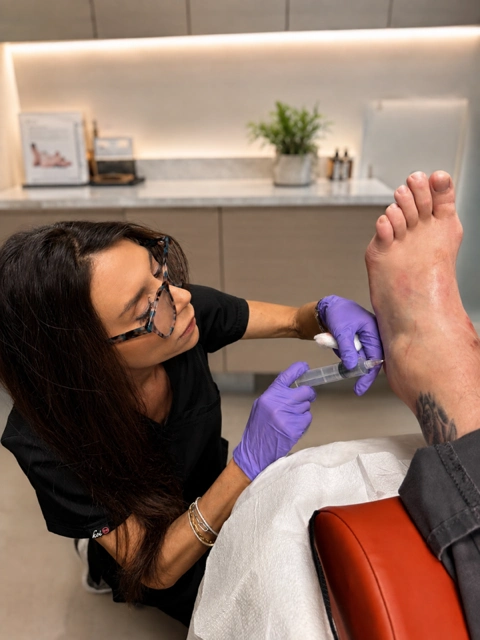
Biological allografts are a relatively new addition to regenerative medicine, using donor-derived tissue rich in growth factors and cell-signaling proteins to support your body’s own tissue repair process. At Enhanced Wellness NM, we offer biological allografts in Albuquerque for patients dealing with joint pain or ongoing inflammation who want a non-surgical option to support healing. Our team often combines allografts with other regenerative therapies, such as PRP, to help support their regenerative potential. Whether you’re managing joint wear or looking to avoid a more invasive procedure, allografts give your body additional building blocks to support its own repair process.
What Are Biological Allografts?
Biological allografts use a flowable matrix derived from birth tissue, rich in anti-inflammatory cytokines, growth factors, and structural components such as collagen and hyaluronic acid. Because the tissue’s natural role is to support development, it carries many of the same regenerative signals your body would otherwise need to produce on its own. Every allograft used at Enhanced Wellness NM comes from bio-ethically donated tissue from screened, consenting donors, processed under strict tissue-banking safety standards to preserve its natural properties.
What Are the Benefits of Biological Allografts?
- Delivers injections rich in anti-inflammatory cytokines and growth factors directly to the treatment area
- Supports the cell-to-cell communication your body uses to activate its own regenerative signals
- Provides a non-surgical option for soft tissue regeneration, avoiding a longer surgical recovery
- Can be combined with PRP to help support a stronger regenerative response
- Integrates with your own tissue to support a smoother, more efficient healing process
Who Is This Treatment For?
Patients with joint pain or degeneration looking for a non-surgical option
Patients exploring a regenerative joint treatment before considering surgery
Patients already working with Dr. Jay on a broader regenerative medicine plan who want to add allografts as one component
How Does the Biological Allografts Process Work?
Health History and Candidacy Review
Your provider reviews your history and current joint or tissue concerns to confirm which approach is the appropriate option for you.
Treatment Area Preparation
The targeted injection site is identified and prepared, often alongside complementary therapies such as PRP to support the allograft’s regenerative potential.
Targeted Allograft Injection
Your provider administers the allograft matrix directly into the treatment area in a targeted injection suited to your specific joint or tissue concern.
Follow-Up and Recovery Monitoring
Your provider monitors your response over the following weeks and discusses whether additional sessions or complementary therapies are appropriate for your ongoing plan.
Why Choose Enhanced Wellness NM?
Functional & Regenerative Medicine Approach
Every allograft treatment is considered alongside your broader picture of inflammation, hormones, and metabolism.
Dr. Jay's Clinical Experience
With more than 25 years in clinical practice, Dr. Jay determines which regenerative option, or combination of options, fits your specific case.
Ethically Sourced Tissue
All allografts are sourced from bioethically donated birth tissue, screened and processed under strict tissue-banking safety standards.
Coordinated Regenerative Care
Allografts are often combined with PRP at our clinic to help support a stronger regenerative response as part of one coordinated plan.
frequently asked questions
What does a biological allograft treatment feel like?
Treatment involves a targeted injection into the affected joint or tissue area, similar to other injection-based procedures. Most patients tolerate the injection well, and your provider will discuss what to expect for your specific treatment area beforehand.
How often should biological allograft treatment be repeated?
How often you need treatment depends on your specific joint or tissue concern and how your body responds. Your provider will recommend a schedule appropriate for your individual case, including whether it should be combined with other regenerative therapies.
Are there any contraindications for biological allografts?
Biological allografts are generally well tolerated, but certain health conditions may affect candidacy. Your provider will evaluate your history before recommending this treatment as part of your plan.
How much does biological allograft treatment cost?
Pricing depends on the treatment area and whether allografts are combined with other therapies, such as PRP. Our team can provide current pricing during your consultation.
Support Your Body's Natural Repair
Curious whether biological allografts are a good fit for your joint or tissue concerns? Request a consultation with Enhanced Wellness NM, and our team will help determine whether allografts, alone or combined with other regenerative therapies, are the right next step for you.
This form is not monitored for medical emergencies. If you are experiencing a medical emergency, call 911. A member of our team will follow up with you within one business day of your request.
Contact Us
Use the form below to request an appointment with our team. Once your request is submitted, we’ll review your information and contact you to confirm your appointment date and time. You will receive a confirmation by phone or email once your appointment has been scheduled.
Important Notice: Contact and appointment request forms are not monitored for medical emergencies. If you are experiencing a medical emergency, please call 911 or go to your nearest emergency room immediately.
Have questions or are you ready to get started?
Call us at (505) 323 – 8100 to schedule your consultation. Our team will review your history, current concerns, and available options so you can make an informed decision about where to begin.